Showing posts with label Interviews. Show all posts

A Point Man On Reform


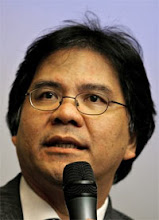
Idris Jala has another mission: repair not just a flag carrier but, more broadly, Malaysia.


Asia ex-Japan is mostly given a pass in the swirling global concerns about sovereign debt, but the region has its worrisome deficit cases, such as India. Add to that roster Malaysia, which means another assignment for national troubleshooter Idris Jala.

As Prime Minister Najib Abdul Raza's designated "driver" of economic and social reform, Jala has been telling government ministries and the public the same thing: If Malaysia did not immediately slash subsidies and make other changes, its government debt of $110 billion could rise to 100% of GDP by 2019.

"When this happens, Malaysia will become bankrupt. We do not want to become another Greece," he said. Najib has since said "prudent" measures are being taken to reduce public debt. (These aren't yet slated to change much.)

Transformation is 52-year-old Jala's specialty. As chief executive he led the spectacular turnaround of the national carrier, Malaysian Airline System (MAS). When he took the helm in late 2005, on leaving a top post at a Shell oil affiliate, MAS was bleeding cash and had losses to the tune of $400 million. He wasted no time eliminating thousands of jobs and brutally terminating unprofitable routes. These were unpopular decisions, but two years later MAS emerged--before the recession--with record earnings of $260 million.

Jala's work did not go unnoticed. He was approached by Najib, then new to the pm job, to join the civil service. He says, "It was also time for me to leave MAS because the team can do the job. My successor (Tengku Azmil Zahruddin Raja Abdul Aziz) is a great person and had been groomed to take over. Leadership is about being redundant."

The prime minister, who took over a faltering alliance that has ruled Malaysia since independence, evidently isn't keen on a redundancy when voters get another shot in parliamentary elections in 2012 or 2013. Thus, the call to Jala to assume his ministerial-level post and senatorial status.

His new reform agenda extends well beyond disciplining the welter of public subsidies and other budget busters. He is also tasked with addressing crime, corruption and falling educational standards. Recently FORBES ASIA sat down with Jala in Kuala Lumpur to ask about his efforts.

Forbes Asia: The prime minister unveiled a new economic model. What is your role in making this a reality?

Jala: We'll run labs involving key sectors like oil and gas, tourism and palm oil. In the tourism lab, for example, we'll discuss how to double tourism receipts in ten years. We have persuaded the private sector to nominate their best and brightest minds to spend time with us full-time at the labs and to come up with solutions.

Several pressure groups like Perkasa, a group that claims to champion Malay rights, want affirmative action to stay. At the same time, the government talks about further liberalizing the economy. How does the government manage different interests?

For one Malaysia to exist we must embrace and accept the different polarities like the Bumiputeras (Malays and indigenous people) versus non-Bumiputeras. We need to allow people to express their views differently and appreciate that there will be tension. You can't fix the problem by removing one polarity, as it'll destabilize the system.

What is being done to address corruption in Malaysia?

The Witness Protection Act has been approved by Parliament. From our rough estimate based on publicly available data, there were 120 offenders convicted since the beginning of this year, including one member of parliament, representing a total of $530 million in cash bribes. We've not caught any big fish yet. We're also tackling corruption in procurement, with details on 2,665 government contract awards published on a procurement website set up by the Ministry of Finance. Transparency is good, and we will keep doing this.

Eighty percent of Malaysians have only a high school degree or less. What is being done to raise educational standards?

We have started 929 preschool classes--18,000 children are benefiting from this, mainly in rural areas. Fifteen thousand remedial teachers have been trained. And 7,616 primary schools have been ranked to focus on results. There are questions on why the government reversed its decision to teach mathematics and science in English. Korea is successful teaching these subjects in the Korean language because they have quality teachers. In the labs we ran we concluded the problem in Malaysia was the quality of teaching. So we must focus on that before we talk about medium of instruction. This was a tough call. The government was advised that rural children have difficulties understanding English. When implementing policies, you have to identify who the majority is or who is most impacted by your policies, not those who make the loudest noise. This has been my biggest challenge since joining the civil service.

Reforms on subsidies for petrol and utilities are needed to reduce Malaysia's fiscal deficit. That's going to require political will. How are you going to approach this problem?

Nobody will dance in the streets if you tell them you're going to withdraw subsidies. This is one of my biggest challenges. Last year total subsidies were $23 billion. This is 4% to 5% of GDP, higher than in countries like Indonesia and the Philippines. We have to scale back to reinvest in other areas of the economy to become a high-income nation. Subsidies have to be withdrawn gradually rather than in a big-bang approach.

And what of the crime problem?

Crime has been rising for the last three years, but we managed to bring the index crime rate down by 15% and reported street crime rate by 40% in the first quarter of 2010, compared with the same period last year. We spent six weeks collecting data to find out why and where crime happens and ran labs, very intense sessions, to find solutions. Among many measures, we mobilized 14,200 police officers to 50 hot spots, and the police have to explain and report on a weekly basis to the prime minister on what they're doing to reduce crime. Street crime has been reduced but not organized crime. The latter remains high because they're syndicated.

Much of Malaysia is still rural ...

Rural basic infrastructure also saw big improvements. The government is spending more money than ever on this. About 400 kilometers of roads were completed in the first quarter and another 350 are under construction. Eight hundred and eighty-four households were connected with water supply and 347 with electricity. I went with the prime minister to Sarawak on a trip to launch an electricity project. The people living in the longhouses [traditional native homes] were very grateful for this. It was quite an emotional event for me. I called my wife, and told her "Even for this alone, I'm grateful I joined the government." These people ask for very little.

How do you transform the civil service and get it to act with more urgency?

We have to change the way we do things in order to transform character. Ambitious targets have to be set to force people to radically change the way they work. When we published that we want to reduce crime by 20%, people asked if I was crazy, but we managed to bring crime down. The prime minister is hands-on and chairs monthly delivery task force meetings. I hold weekly problem-solving meetings with various ministers, who set their targets, which are published in a book for accountability.

Any recipe for staying focused?

Helen Keller said, "Keep your face to the sunshine and you'll never see shadows." I have no difficulties doing something that won't succeed. The thing I ask myself is whether I did my best and whether that's good enough. It's a very liberating mindset. You have to see this as a calling, not a job.

Source: Forbes Asia

Datuk Seri Idris Jala answers your 10 questions


1. What has been the biggest obstacle so far in implementing the Government Transformation Programme (GTP)? Jalina Hassan, Kuantan
The biggest challenge is to get the Government to achieve “big results fast”. When we ran the GTP Open Day, over 80% agreed that this was the right thing to do. However, the public was very sceptical. Someone cynically said: “Government civil servants and speed do not sleep in the same bed.” We realise that the rakyat is impatient for results but with the GTP Roadmap, we have clear direction and targets.

We have made significant progress in the first quarter of this year. Street crime has dropped 39.6% as compared to our initial target of 20% reduction by end 2010. We have mobilised 14,222 police officers into 50 hot spots and 3,150 RELA and JPAM members too.

For the urban public transport, we have seen an increase of 938,775 passengers for the light rail transit (LRT) in just three months after installing eight new four-car trains. For the hardcore poor, we have seen a massive reduction of more than 12,000 people in this country, which have been taken out from the hardcore poor category. These show that the civil servants can run and get things done quickly.

2. What are the common approaches that you’ve put in place in the Performance Management and Delivery Unit (Pemandu) that you also had in MAS or Shell? James Rajan, Ipoh
We introduced what the Government is now very familiar with, called Laboratories or labs. When I was in MAS, we ran over 200 labs to develop solutions.

The first GTP labs for the six National Key Result Areas (NKRAs) were conducted in Sept-Oct over six weeks and was made up of 250 top civil servants and representatives from the private and social sectors. During that period – and I’m sure what I’m about to say will surprise – the civil servants took on their tasks faster than the people in MAS and Shell. They were very eager and enthusiastic.

3. Has the recent crisis of confidence facing the police following the shooting of a 14-year-old boy had a serious dent in your transformation efforts? Kesavan Murthy, Penang
First and foremost, the nation is saddened by the death of Aminulrasyid Amzah in a most unfortunate incident. I personally would like to express my deepest sympathy to his family.

In the true spirit of transparency, an independent panel overseeing the investigation has been appointed and we should let the experts take their course of action instead of speculating. The Home Ministry and the police are still tasked to deliver their specific targets to the rakyat via the crime NKRA. There are early signs of positive achievements.

While statistics show significant progress in crime reduction, it would be naive to think that such an isolated incident has not affected public confidence and perception of the police force.

To me, despite this, the police have been doing a fantastic job. I really hope we, as concerned citizens, will not be easily lured into discussions on isolated cases that may alter our perceptions on the other positive things that the Government is doing.

4. What progress has been made so far? Kevin Loh, Penang
The GTP is delivering very visible and tangible outcomes. To fight corruption, we have put in place the Whistleblower Protection Act, published 2,665 government contract award winners at MyProcurement Portal, implemented the Integrity Pact (as recommended by Transparency International) and published the 97 convicted offenders on the Malaysian Anti-Corruption Commission’s website.

Ridership for bus express transit and LRT has increased by 13% and 7% respectively. In education, 929 pre-schools have started and 7,616 primary schools nationwide have been ranked.

The School Improvement Toolkit has also been implemented to address various weaknesses. The Government has also reduced the number of hardcore poor by providing them with financial aid.

Rural basic infrastructures are currently being developed and by 2012, we would have more than 7,000km of new and upgraded roads, 1,900km of which will be in Sabah and Sarawak.

There will also be 50,000 houses to be built and restored, 140,000 households will be connected with electricity and 360,000 homes to be connected to clean water.

Public transportation upgrades will decongest the central business district in Kuala Lumpur, reducing the time taken to travel into our city centres. More than 40,000 flood mitigation projects are already underway. These are just some of the key national initiatives underway.

5. Somehow, many assume that you are a Muslim. Any memorable encounters with regards to this ignorance? Rashidah Ibrahim, Petaling Jaya
Many years ago, my family and I lived in Subang Jaya. My neighbour, thinking I was a Muslim, invited me to a tahlil, on the occasion of sending their son for further studies in the UK.

As a friendly and respecting neighbour, I accepted the invitation and joined them. During the religious ceremony, many people at the event were shocked to discover that I was in fact, a Christian. It was a memorable experience as I thought the tahlil was quite similar to the tribal send-off we practise in the longhouses. During the Ramadan period, I usually get stares when I’m dining publicly. Apart from Christmas greeting cards, I also get Hari Raya cards.

6. What improvements would you like to see in our education system? Zuhairah Ali, KL
We must take big steps. Statistics show that 40% of students who enter primary 1 have not been to kindergarten. This means there is an evident disparity in the level of understanding as well as skill sets of children.

This is why our NKRA for education is working on the foundation to ensure a lot more young children attend pre-school. As of January this year, 18,000 children have benefitted from 929 new pre-schools. The education NKRA is also operationalising other initiatives such as the ranking of 7,616 primary schools and coming up with a toolkit known as School Improvement Programme (SIP). The SIP will anchor recommendations and action plans by the schools into four key levers – principals, teachers, students and facilities.

7. Your success in turning around big corporates is inspiring. I will be pursuing my tertiary education next year. What’s your advice on my course selection and future career path? Filzah Razak, Johor Baru
Simple – do something that you have a passion for and act on it. Always leverage on your strengths. Don’t get too obsessed with your weakness.

I have two children, Leon and Max and both have different strengths and capabilities. Leon followed his passion and chose to do film studies in London. I have never once considered dictating or painting an ideal future for him. He will be graduating this July and I am proud of him.

The point here is this – if you feel strongly about something, put your thoughts and actions together and strive for it. Do not get distracted or demoralised by views or opinions.

8. How are the objectives related to the key performance indicators (KPIs) communicated to the ground? As for underachievers, how do you address these “failures”? Tam Yeng Siang, Petaling Jaya
The performance and delivery of the six NKRAs and 29 Ministerial Key Result Areas are assessed annually and bi-annually.

So far, out of 29 ministries, 85% have achieved their KPI targets. This is the first time in the history of Malaysia that the ministers are subjected to the rigorous performance assessment by the Prime Minister. The Government will consider performance-based remuneration in the near future to recognise and award the performers.

Consequence management will be in place to tackle poor performers. To ensure the transformation programme is sustainable, you do not focus on punishment as a starting point. You focus on rewarding the performers, and the rest will follow. As for the public, we will publish an annual report each year that will highlight the results of the GTP – what we have and have not achieved.

9. What kind of legacy do you want to leave and what inspires you to do better in life? V. Suresh, Johor Baru
Although the main focus is to get the desired results, I am also inspired to see people grow as leaders in the process. Honestly, that is what truly inspires and energises me.

I like to share this famous quote by John Ruskins – “The greatest reward from a man’s toil is not what he gets from it, but what he becomes of it.”

The transformation will give birth to new leaders from the civil service who have surfaced from the labs. When you allow for a safe environment where people can discuss and debate openly, you will discover hidden talents and potential leaders. When you know that your troops are fully matured as a leader and know how to operate or run the company, it’s time to go. This is where you transit from taking a very directive leadership stance to an empowering approach.

10. How different is it to work in the Government compared with the private sector? Johan Abdullah, KL
I have worked for 28 years in the corporate world. Now, for the first time, I don’t need to improve the profit and loss (P&L) of a company or department. In MAS and Shell, I was accountable to improve bottomline, hence I religiously reviewed the P&L statement every day.

In the Government, you focus on services or initiatives to improve the outcome for the rakyat. KPI for the government is to benefit the rakyat. The same transformation methodology is applied but the anchor are the outcomes and KPI.

There are obvious differences in the culture. At Shell, we speak our minds. Having been in that environment for 23 years and moving to MAS for three years and eight months was an adjustment. But the MAS experience was invaluable to me especially in this job. We have to learn to be tactful in our approach while not compromising our integrity.

In Shell and MAS, we know precisely our customer and target customer segments. In the government, although we look after the rakyat, we sometimes struggle to answer this one question – “Who is the rakyat?”. There are a lot of polarities that exists which we need to manage – rich vs poor, urban vs rural, educated vs less educated, old vs young, etc.

What we found at times is that the majority of the rakyat is also the silent majority. We can also be easily distracted by isolated issues by minority groups. So, it is not always clear cut.

Source: TheStar

Do you have any questions you'd like to ask him? Put it down here as comments.

Interview with Datuk Seri Idris Jala on BFM


Government Transformation Program (GTP) - In Part 1, Datuk Seri Idris Jala, CEO Of Performance Management and Delivery Unit (Pemandu) talks about changing the Malay mindset, bureaucracy, convincing disillusioned Malaysians of the government's poor record in successful implementation, how he has tweaked transformation principles from the private sector to the public sector, penalties for non-performance in the government and faults with the government procurement website. Duration: 11m 44s


In Part 2, Datuk Seri Idris Jala, CEO Of Performance Management and Delivery Unit (Pemandu) talks about political will, key result areas like crime, corruption, the Whistleblower Protection Act, KPIs and education. Duration: 17m 43s


In Part 3, Datuk Seri Idris Jala, CEO Of Performance Management and Delivery Unit (Pemandu) talks about affirmative action, the New Economic Model, per-capita income targets, tourist arrivals and the AirAsia X-MAS tussle, and whether there is a constructive role the media can participate in. Duration: 21m 58s


Source: BFM - The Business Radio 89.9